Verdict
Delta Force doesn't reinvent the tactical shooter, but it stacks three well-tuned modes and honest free-to-play monetization into one package that's easy to recommend to anyone priced out of Tarkov or bored of Warzone.
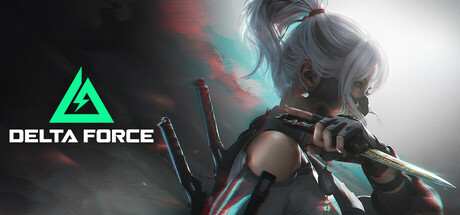
Delta Force set out to do something few shooters attempt: put a 32v32 battlefield mode, a PvPvE extraction mode, and a scripted PvE campaign in the same free client and ask players to move between them without friction. Having spent time across all three since the game's wider rollout, we came away convinced it mostly works — even if "mostly" is doing some real load-bearing here.
Developed by Team Jade, Delta Force arrived on PC and mobile before adding a PS5 and Xbox Series X|S release in August 2025, and it's stayed live-service ever since, with seasonal updates arriving on a cadence that rivals any major shooter on the market. Season Meltdown added a liquid-nitrogen specialist and a nuclear-plant extraction map earlier in the year; Season Reorientation, which launched September 8, brought a support-focused operator duo — a handler and a tracking dog — plus a reworked extraction map and a new Black Hawk Down-inspired Warfare map called The Mog.
The essentials
Delta Force splits into three pillars. Warfare is the large-scale mode: 32v32 combined-arms battles with vehicles, objectives, and the kind of scale that recalls Battlefield more than any extraction shooter. Operations is the PvPvE extraction mode, the one drawing the most direct comparisons to Escape from Tarkov — you loot, you extract, you lose everything if you don't make it out. And Hawk Ops is the scripted PvE side, a campaign mode built around Black Hawk Down-style missions that gives the game a single-player-adjacent hook neither of the other modes offers.
Running all three under one roof is an ambitious structural bet, and it's the thing that most defines Delta Force compared to its rivals — most tactical shooters pick one lane and stay in it.
The experience
Where Delta Force earns its keep is in how the guns feel. Weapon handling is tight, recoil patterns are readable without being trivial, and the time-to-kill sits in a sweet spot that rewards positioning and aim without turning every fight into a coin flip. That foundation is what lets the mode-hopping work at all — if the core shooting felt mushy, splitting attention across three formats would just expose the seams faster.
Operations, the extraction mode, is the standout for anyone coming from the Tarkov-style subgenre: the tension of a loot run is intact, but the onboarding is considerably friendlier, with faster matches and less punishing gear loss than the mode's spiritual predecessor. Warfare, meanwhile, delivers on scale — vehicles and large maps give it a different rhythm than the tighter objective modes, closer to a full-scale battlefield than a tactical skirmish.
Monetization deserves a specific callout because free-to-play shooters have trained players to expect the worst. Delta Force keeps its store cosmetic and battle-pass driven, and by most accounts through mid-2026 it has avoided the pay-to-win traps that sank goodwill for other F2P military shooters. That matters more than it sounds like it should — it's the difference between a game you can recommend without an asterisk and one you have to caveat.
The limits
The three-pillar structure is also the review's biggest asterisk. Warfare, Operations, and Hawk Ops each borrow their identity from a different established genre, and none of them quite matches the depth a dedicated specialist offers in that same lane. Extraction purists will still find more systemic depth in Tarkov; large-scale-warfare fans will still find more polish in Battlefield. Delta Force's advantage isn't depth in any single mode — it's not having to choose, and not having to pay to find out which one you like.
The other friction point is pace. Team Jade has shipped seasons on a tight cycle — new operators, new maps, new mechanics landing every couple of months. That's good for keeping the game feeling alive, but it's also a genuine time commitment; players who step away for a season or two will come back to a meaningfully reshuffled meta and map rotation.
Who it's for
Delta Force makes the most sense for players who want tactical-shooter variety without maintaining three separate installs, or who've been priced out — financially or in time investment — of committing fully to Tarkov-style extraction. It's a weaker pick for genre purists who already have a favorite lane and don't want that experience diluted by two other modes competing for the same client's attention.
Verdict
Delta Force isn't the best extraction shooter on the market, and it isn't the best large-scale military shooter either. What it is is a genuinely well-built attempt to combine both without gouging players for the privilege, backed by gunplay that holds up under scrutiny. That combination is enough to earn it a 7.9/10 — a strong, honest recommendation with a clear-eyed note that jack-of-all-trades design has a ceiling the specialists don't.
Sources: Delta Force on Steam, Delta Force (2025 video game) — Wikipedia, Delta Force Season Reorientation coverage — mmoexp, Delta Force Season Meltdown coverage — TechTimes
Pros
- Gunplay and weapon handling feel tight and consistent across modes
- Genuinely varied mode lineup — Warfare, extraction, and a PvE campaign in one client
- Monetization stays cosmetic-only, with no meaningful pay-to-win pressure
Cons
- Three modes pulling in different directions means none gets the depth of a genre specialist
- Frequent seasonal content pushes create an update treadmill that can feel relentless